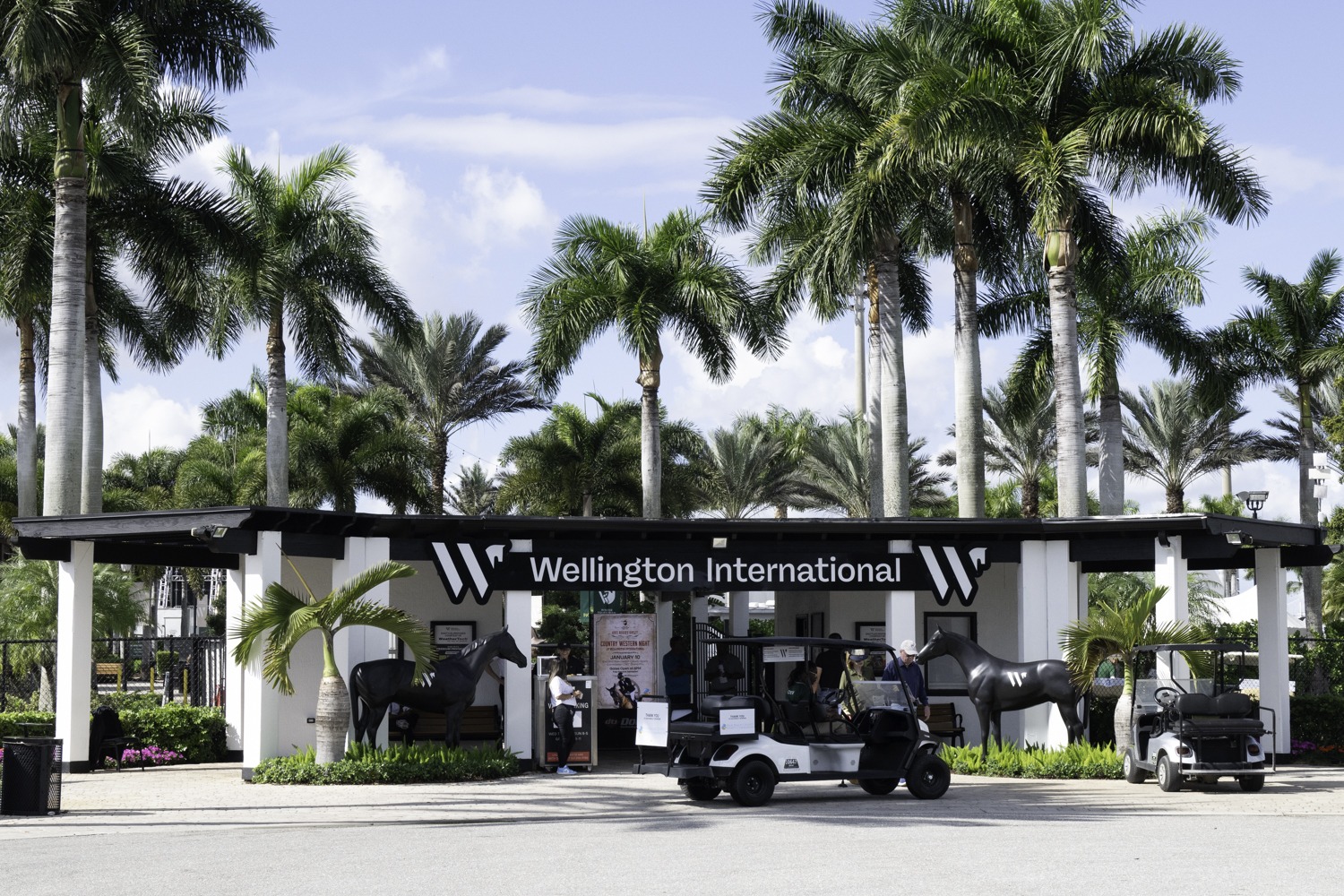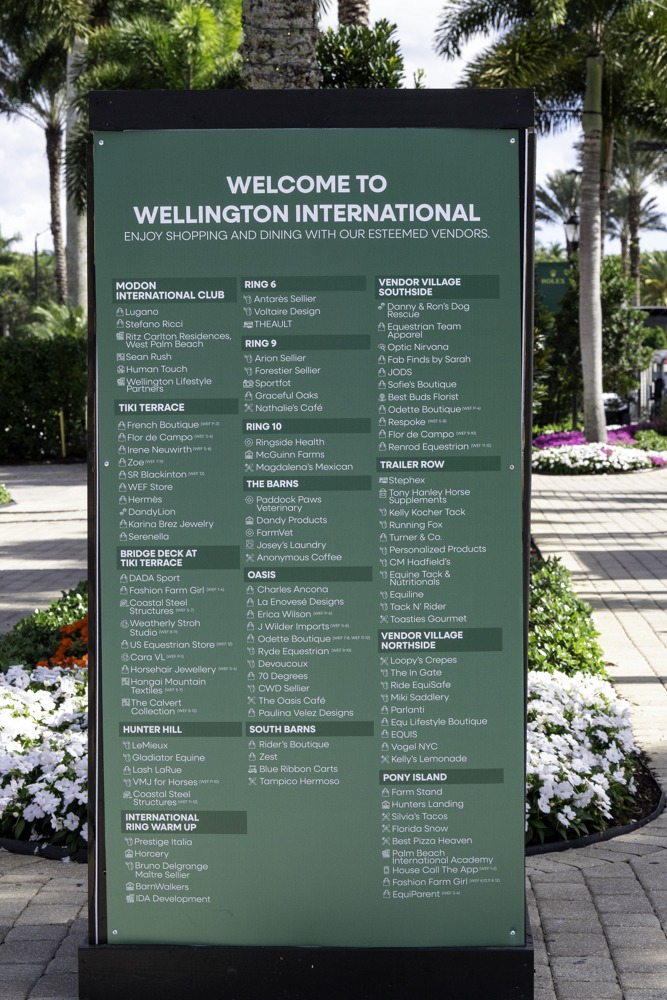

The 2026 Winter Equestrian Festival (WEF) opened its season with a clear sense of intention. More than the world’s largest equestrian circuit, WEF has evolved into a destination that defines the winter experience in Wellington—where elite sport, thoughtful horsemanship, and community converge. That vision was front and center at the 2026 WEF Press Conference held this past Thursday at Wellington International, as leaders and athletes from across disciplines gathered to preview the 12-week season ahead.
Four-time Olympian Laura Kraut, U.S. team silver medalist and currently ranked seventh in the world, opened the discussion with the steady authority of someone whose career has unfolded alongside Wellington’s rise. “I’ve ridden here since 1976,” Kraut said with fondness. “This venue is crucial for preparing for international competitions and why the US has won more medals than any other country.”
Kraut described WEF as both a competitive necessity and a rare opportunity—one of the few venues where riders can consistently test themselves and their horses against the best in the world, week after week. Her remarks reflected a deep appreciation for the environment Wellington provides, where preparation, pressure, and partnership meet at the highest level.
Wellington International CEO Murray Kessler followed, emphasizing the importance of elite competition and continued investment in both sport and spectator experience. “You have to have the very best in the world to have the top riders of the world,” Kessler said. “We’ve elevated the sport and the spectator experience making this a spectacular world class facility.”
Kessler announced that the 2026 season will feature one $100,000 Grand Prix, three $500,000 Grand Prix events, and conclude with the $1,000,000 Rolex U.S. Equestrian Open CSI5* Grand Prix—an evening that has become a hallmark of the Wellington winter season.
His remarks underscored an approach rooted in progress without sacrificing tradition, pointing to ongoing upgrades in footing, facilities, lighting, and equine welfare, alongside a continued focus on accessibility and community engagement. “Wellington is where champions are made,” Kessler added, “And because a lot of riders live here it makes it more unique than any other location.”
Kessler also highlighted the venue’s broader influence beyond the showgrounds. “Last season Wellington International was responsible for bringing in over $530 million dollars, the most of any other sporting event in Palm Beach County.”
That global presence extends seamlessly into dressage, as emphasized by Thomas Baur, Director of Sport for the Adequan® Global Dressage Festival (AGDF). Baur spoke to AGDF’s growing role within the winter circuit, where elite international competition and emerging talent share the spotlight.“This season we have a lot of upgrades, 500 covered seats (first come, first serve) and a new FEI Riders lounge,” Baur said. “We have incredible arenas and there is nothing like being here on a Friday night as the spectators bring so much energy that allows a true connection to dressage.”
Baur added that the season will include several World Cup qualifier Grand Prix Freestyle competitions, as well as two para-dressage events—further reinforcing Wellington’s commitment to inclusivity and excellence across disciplines.
Hunter jumper standout Liza Boyd offered a perspective shaped by longevity, horsemanship, and life in Wellington. She spoke of WEF not just as a competition circuit, but as a place where the hunter discipline continues to evolve while honoring its classical foundation. Thoughtful course design, strong judging, and subtle excellence remain central to the experience.
“I feel lucky to live here, my kids go to school here,” Boyd said. “I love the energy and the atmosphere, it gives a lot of opportunity to give young horses experience and exposure.”
From the dressage arena, Ben Ebeling—the inaugural U.S. Equestrian Open Final winner—represented a new generation of American talent shaped by Wellington’s unique environment. His presence served as a reminder that WEF is not only a stage for international stars, but a place where future champions are developed. Ebeling spoke about the opportunities AGDF provides to compete under pressure, in front of knowledgeable audiences, within a system designed to support long-term growth.
As the press conference made clear, the Winter Equestrian Festival is about more than ribbons and rankings. It is about infrastructure, welfare, and building a sustainable future for equestrian sport. From grassroots riders to Olympic veterans, WEF functions as a shared ecosystem—one where careers are launched, refined, and sometimes redefined.
That philosophy carries through the entire season. From the electric atmosphere of Saturday Night Lights to the quiet focus of early-morning flatwork, WEF offers an intimate view of equestrian sport at its highest level. The proximity between fans and athletes, amateurs and professionals alike, remains one of Wellington’s defining qualities.
Leaving the press conference, the message was unmistakable: WEF 2026 is not standing still. With strong leadership and guidance from the sport’s most respected voices, the Winter Equestrian Festival continues to set the standard—where excellence, care, and lifestyle align in a way few venues in the world can match.
Visitor Information
Wellington International is located at 3400 Equestrian Club Drive. Admission is free, with the exception of Saturday nights, when a $25 parking fee applies.
General admission to the Adequan® Global Dressage Festival is located at 13500 S Shore Blvd, Wellington, admission is free and open to visitors Wednesday through Sunday during daytime competition. Daytime valet parking is $20. There is a $25 parking fee on Friday nights where gates open at 6 p.m., and competition begins at 7 p.m.